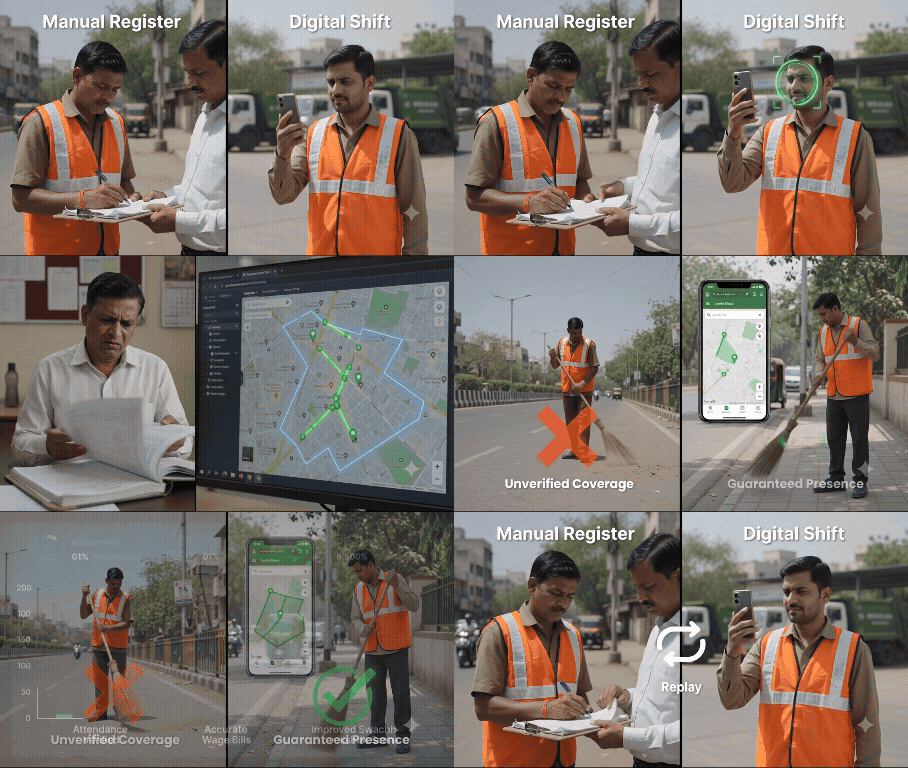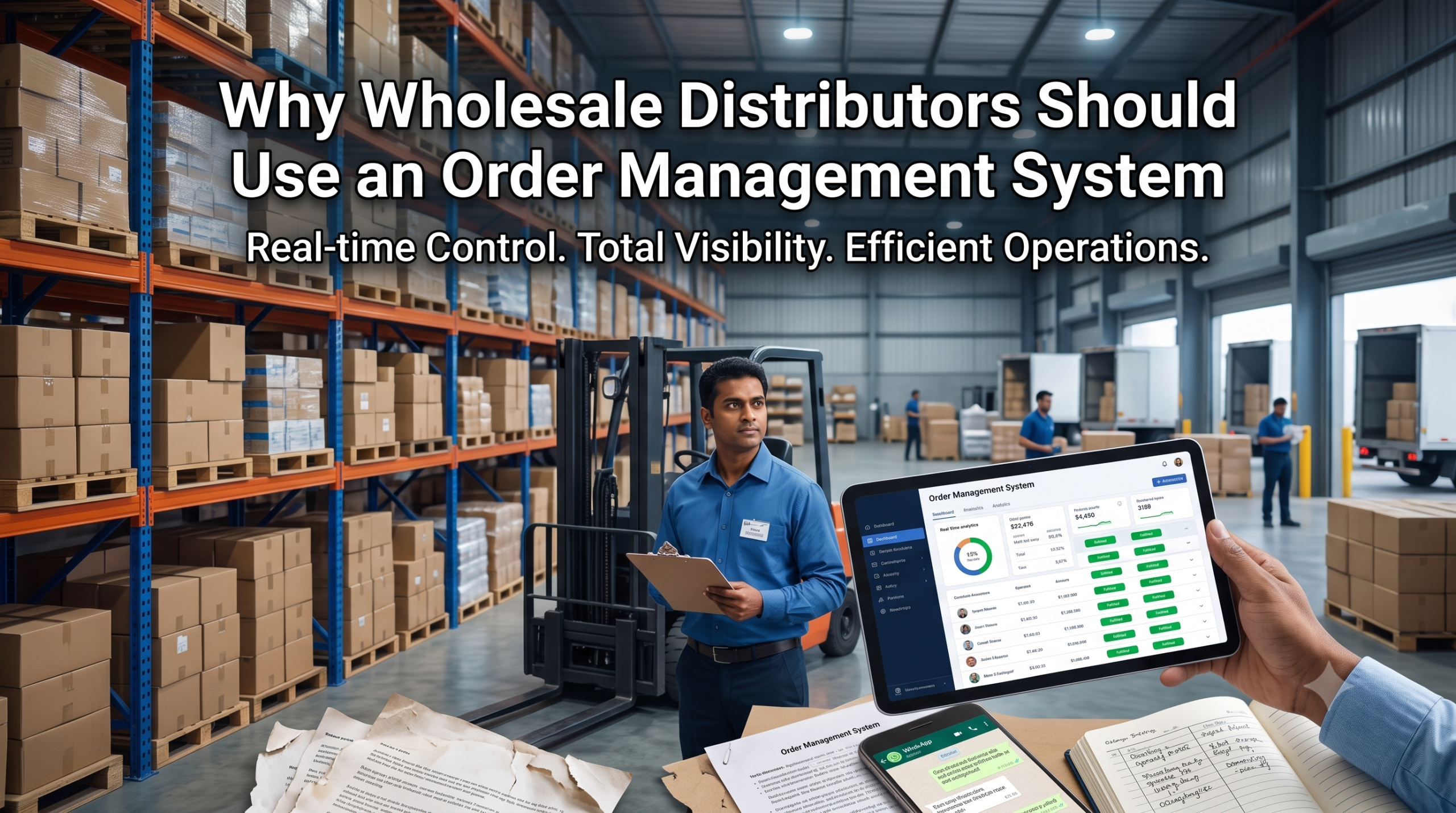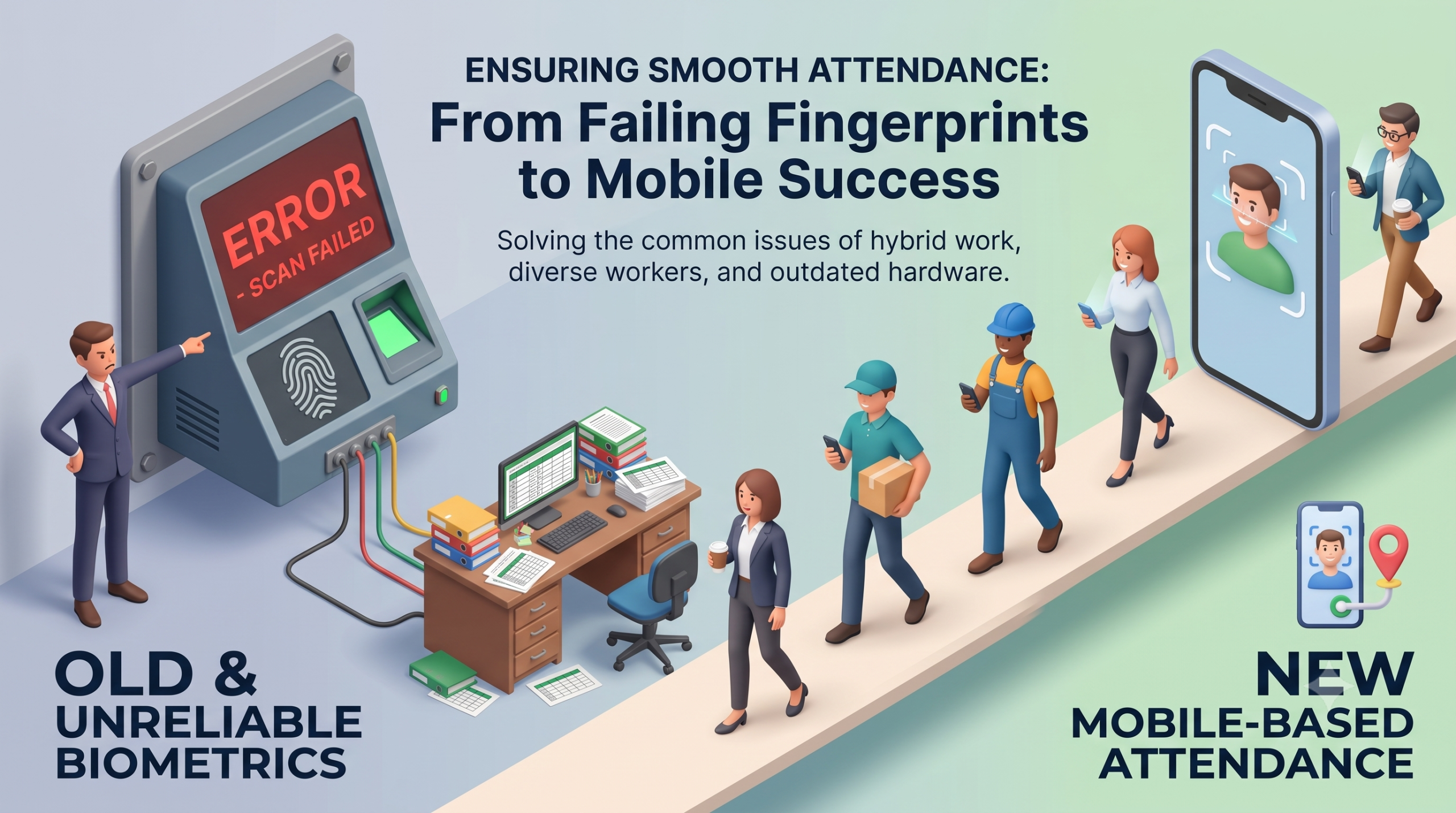

Anyone who has worked with a municipal corporation knows the drill. A garbage bin overflows near a market for three days before someone notices. A sweeper marks attendance but never actually reaches the ward he’s assigned to. A citizen complaint about an open dump sits unread in a register that gets reviewed once a month, if that. Cleanliness in Indian cities has never really been a manpower problem — it’s been a visibility problem. Nobody at the top level had real-time eyes on what was happening at the street level. That’s the gap the Internet of Things (IoT) has quietly started to close over the last few years.
The Old Way Wasn’t Broken by Choice, It Was Broken by Design
Traditional solid waste management in most Urban Local Bodies (ULBs) ran — and in many places still runs — on paper registers, phone calls, and physical inspections by overworked sanitation supervisors. A supervisor responsible for 40 wards simply cannot be everywhere. So, monitoring became reactive: something goes wrong, a citizen complains loudly enough or a councilor gets embarrassed, and only then does action happen.
IoT flips this model from reactive to predictive. Instead of waiting for a complaint, the system tells you a problem is forming before it becomes visible garbage on a street corner.
Where IoT Actually Plugs into Municipal Cleanliness
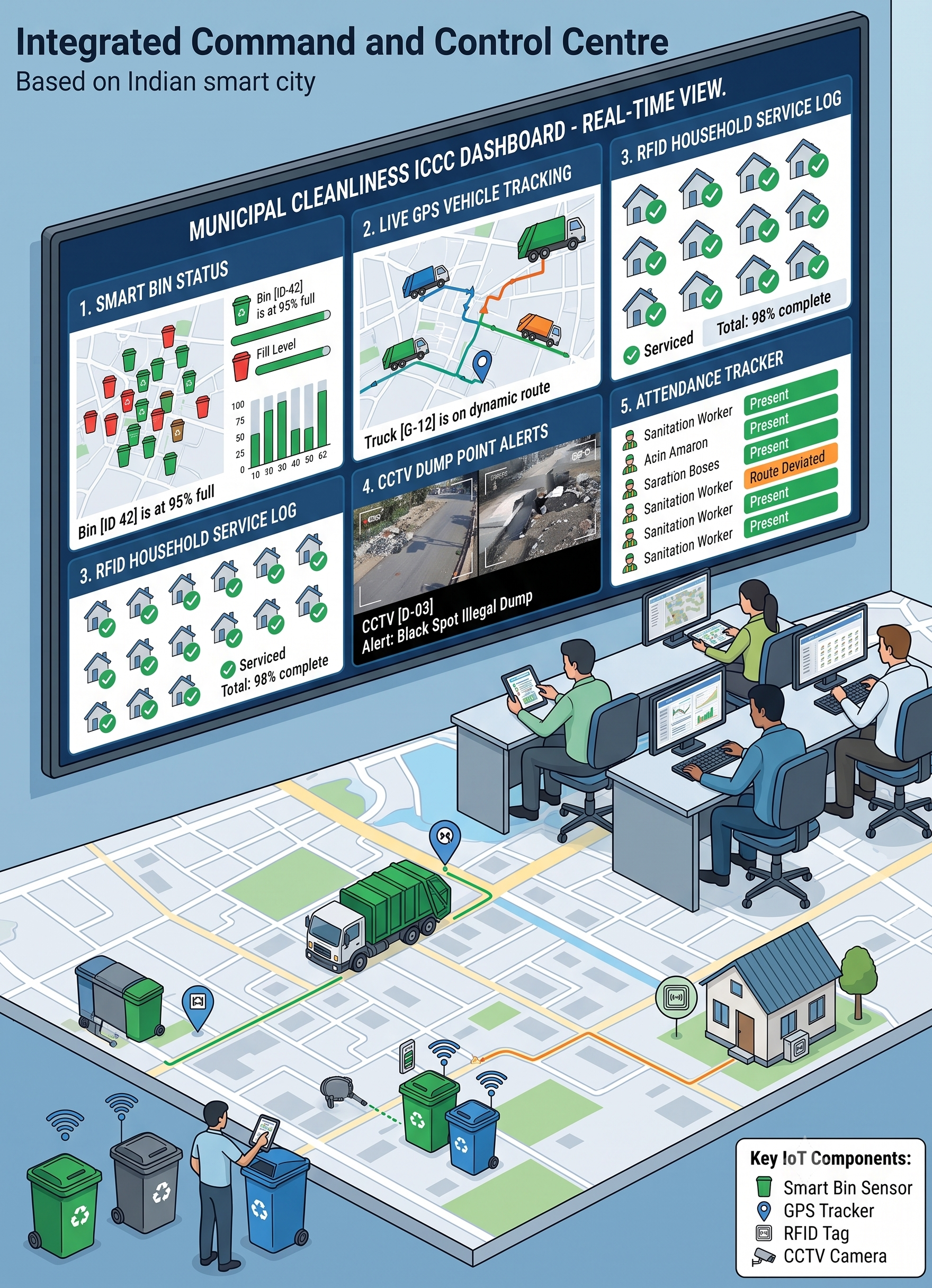
1. Smart bin sensors and fill-level monitoring
Ultrasonic or infrared sensors fitted inside community bins measure fill levels in real time and push that data to a central dashboard. Instead of trucks running fixed routes regardless of need, route planning becomes dynamic — trucks go where bins are actually full. This alone has been shown to cut unnecessary trips and fuel costs significantly in cities that have piloted it.
2. GPS-tracked waste collection vehicles
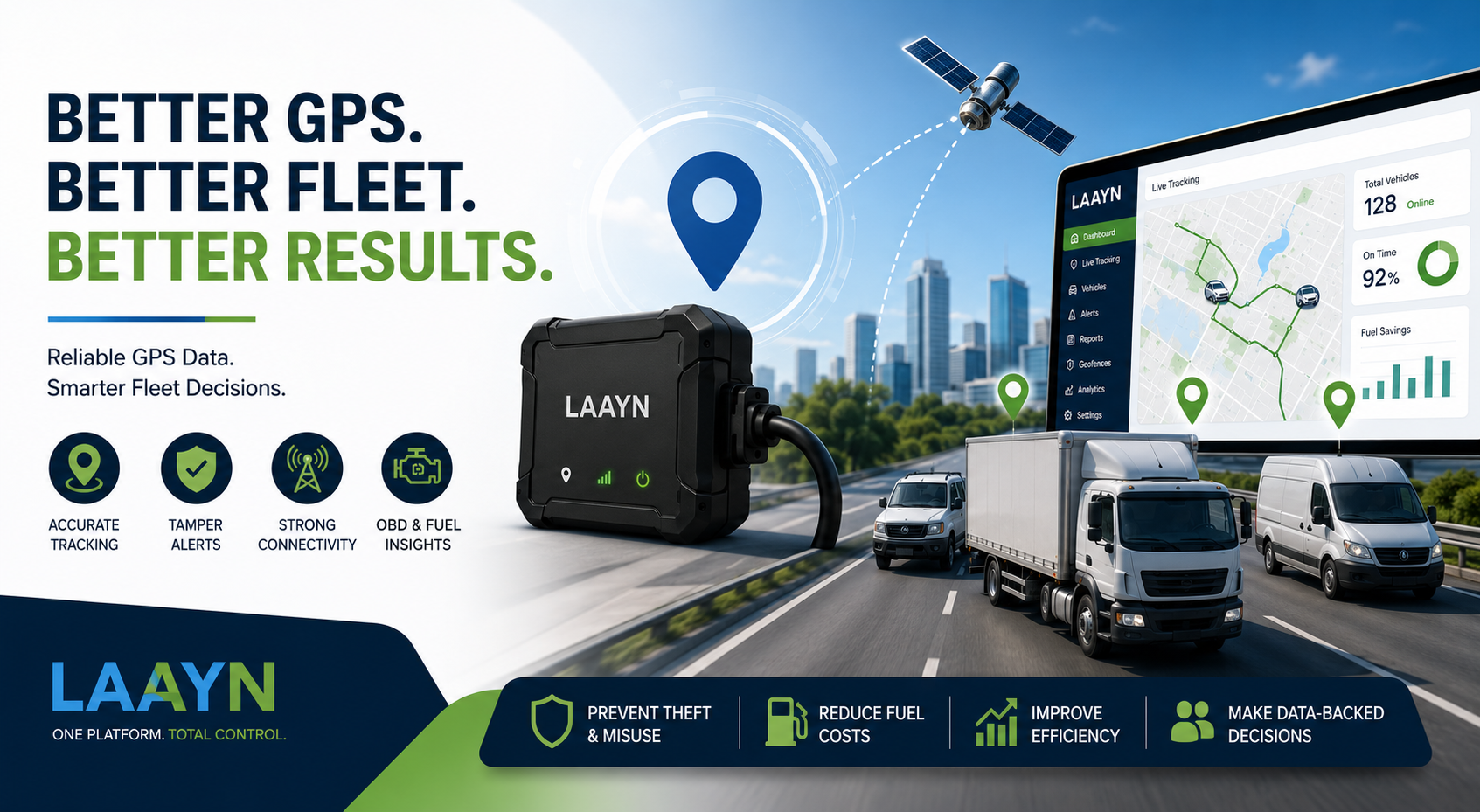
Every waste collection vehicle fitted with a GPS device becomes a data point. Municipal control rooms can see, live, whether a truck actually completed its assigned route, how long it idled, and whether it deviated from the collection schedule. This is the single biggest lever for accountability — because for years, “the truck came” or “the truck didn’t come” was purely his-word-against-hers between the contractor and the ward officer.
3. RFID-tagged household bins
In door-to-door collection models, RFID tags on household bins let the system log exactly which houses were serviced on a given day. This data becomes powerful when tied to contractor payments — pay for verified service, not assumed service.
4. CCTV-based dump point and black spot monitoring
Repeat offenders — the same open dumping spots that reappear no matter how many times they’re cleared — can be monitored through existing CCTV infrastructure with computer vision layered on top, flagging dumping activity automatically instead of relying on a human watching 40 screens.
5. Integrated Command and Control Centre (ICCC) dashboards
All of the above feeds into a single dashboard used under Smart City and Swachh Bharat Mission frameworks — vehicle tracking, bin status, worker attendance, and citizen complaints in one view, giving the Municipal Commissioner or CEO a genuine real-time picture instead of a monthly PDF report.
A Quick Look at What This Looks Like in Practice
Consider a mid-sized ULB that used to rely entirely on manual supervision for its solid waste collection fleet. Drivers logged their own trip sheets, complaints went into a physical register, and there was no way to verify if a “completed” route had actually covered every ward. After IoT-based vehicle tracking and a centralized dashboard were introduced, the same ULB could see, for the first time, which routes were consistently skipped, which vehicles were running empty trips, and where contractor billing didn’t match actual service delivery. Within a few months, service-level compliance became measurable rather than assumed — and that measurability is what let the administration hold contractors accountable against penalty clauses that had existed on paper for years but were never enforced because nobody had proof.
This is the quiet, unglamorous value of IoT in municipal cleanliness — not a flashy transformation, but the simple ability to prove what’s actually happening on the ground.
Why This Matters Beyond Just “Clean Cities”
There’s a compliance angle too. Swachh Survekshan rankings, which cities compete fiercely for, increasingly weight technology-enabled monitoring and real-time data as scoring criteria. A city that can show live GPS logs, sensor data, and digital grievance redressal has a structural advantage over one relying on manual attestations. IoT, in this sense, isn’t just an operational tool anymore — it’s becoming a ranking and funding lever under central schemes.
There’s also a public health dimension that gets underplayed. Overflowing bins and irregular collection directly correlate with vector-borne disease risk, especially during monsoon months. Real-time monitoring that shortens the time between “bin is full” and “bin is emptied” has a direct, if unglamorous, public health payoff.
The Honest Limitations
IoT is not a silver bullet, and any vendor telling a ULB otherwise is oversimplifying. Sensor networks need maintenance — a broken sensor reporting false data is arguably worse than no sensor at all, because it creates false confidence. Connectivity in low-signal areas remains a genuine constraint in several Tier-2 and Tier-3 towns. And technology only closes the visibility gap — it still requires municipal will to act on what the dashboard shows. A control room screen full of red alerts means nothing if nobody is empowered or incentivized to respond to them.
Where This Is Headed
The next phase for most ULBs isn’t more sensors — it’s better integration. Right now, many cities have vehicle tracking from one vendor, bin sensors from another, and a citizen complaint app from a third, none of which talk to each other. The real unlock is a single command center that ties GPS fleet data, worker attendance, bin/dump monitoring, and citizen grievance systems into one dashboard with automated escalation rules — so a complaint about an overflowing bin automatically triggers a route change for the nearest truck, without a human having to manually connect those dots.
What ULBs Should Actually Ask Before Signing a Vendor
A lot of IoT pitches to municipal bodies sound impressive in a boardroom demo and fall apart in field conditions. Before committing budget, it’s worth asking a vendor a few pointed questions: How does the sensor network perform during monsoon, when connectivity and hardware both face their toughest test? What’s the actual battery life on bin sensors before a truck needs to be dispatched just to replace batteries — because a sensor requiring frequent manual servicing defeats its own purpose? And critically, does the dashboard integrate with existing Swachh Bharat Mission and Smart City ICCC reporting formats, or will the ULB end up maintaining two parallel reporting systems instead of one?
These aren’t nitpicks — they’re the difference between a pilot that gets extended citywide and one that quietly gets shelved after the initial installation, which happens more often in municipal technology deployments than vendors like to admit.
Funding and Procurement Considerations
Most ULBs fund IoT-based cleanliness monitoring through a mix of Smart City Mission grants, state government ULB modernization funds, and in some cases CSR partnerships with private companies looking to support urban sanitation infrastructure. Procurement typically happens either through a capex model (municipality owns the hardware outright) or an opex/SaaS model (vendor maintains hardware, municipality pays a recurring service fee). The opex model has grown more popular recently because it shifts hardware maintenance risk — dead sensors, damaged cameras, GPS unit failures — onto the vendor rather than the municipality’s already-stretched technical staff.
Final Word
Cleanliness at a city scale was never really about how many workers or trucks a ULB has. It’s about whether the administration can see, in real time, what’s actually happening across hundreds of wards simultaneously. IoT gives municipalities that visibility for the first time in a way manual supervision never could — and visibility, more than manpower, is what turns a Swachh Bharat mandate from a slogan into a measurable outcome.
Looking to bring IoT-based monitoring, GPS fleet tracking, or ICCC dashboard integration to your municipal or smart city project? LAAYN works directly with ULBs, Smart City SPVs, and infrastructure consultants on end-to-end solid waste management IoT deployments — from sensor and camera hardware to command center dashboards. Get in touch to discuss your city’s specific requirements.
Learn more about LAAYN’s IoT Solid Waste Management System, or contact our team for a demo.