
Sanitation work in Indian cities operates under a structural trust problem that has very little to do with the workers themselves and everything to do with how attendance and deployment have traditionally been verified. A sweeper assigned to a two-kilometer stretch of road can, on paper, be marked present every single day of the month — whether or not that stretch actually got swept. This isn’t usually about individual dishonesty; it’s about a system where verification was never really possible at scale, and where contractors, supervisors, and municipal bodies have often had misaligned incentives to look the other way.
Why Sanitation Attendance Is a Different Problem Than Office Attendance
Office attendance is relatively simple: is the person physically present at a defined location during defined hours? Sanitation worker attendance carries an extra dimension — presence isn’t enough; location and movement across an assigned zone matter just as much. A worker can badge in at a central depot in the morning and then be unaccounted for the rest of the shift, and a fixed biometric machine at the depot has no way of catching that.
This gap has real consequences
Municipal budgets bleed on ghost attendance. Sanitation wage bills are among the largest recurring expenditures for most ULBs. When attendance can’t be independently verified against actual zone coverage, municipalities end up paying for work that may not have happened, which is both a fiscal leak and, frankly, unfair to workers who do show up and do the work, since the system doesn’t distinguish between them and those who don’t.
Contractor accountability becomes unenforceable. Most sanitation work in Indian cities is outsourced to private contractors under performance-linked contracts. But performance can only be enforced if it can be measured. Without zone-level verification, contractors can (and in documented cases, do) under-deploy workers while billing municipalities for full staffing, because there’s no independent proof of actual deployment.
Cities lose Swachh Survekshan and ODF-linked scoring. As mentioned, national ranking frameworks increasingly reward verifiable, technology-backed service delivery. A city that cannot produce real, granular attendance and coverage data for its sanitation workforce is at a structural disadvantage against cities that can.
Why Facial Recognition Alone Isn’t Enough — And Why GPS Alone Isn’t Either
It’s worth being specific about why both technologies need to work together, because each solves a different half of the problem.
Facial recognition verifies identity — confirming that the person marking attendance is actually the registered worker, not a substitute sent in their place (a documented practice in some contract labor arrangements, where a registered worker is paid but sends someone else, or nobody, to do the actual work).
GPS and geofencing verify location and movement — confirming the worker was actually present within their assigned zone throughout the shift, not just at a single check-in point at the start of the day.
Neither alone closes the loop. Facial recognition without location tracking confirms identity at one moment but says nothing about whether the person then went and did their assigned work. GPS tracking without facial verification confirms a phone or device moved through a zone, but not who was carrying it.
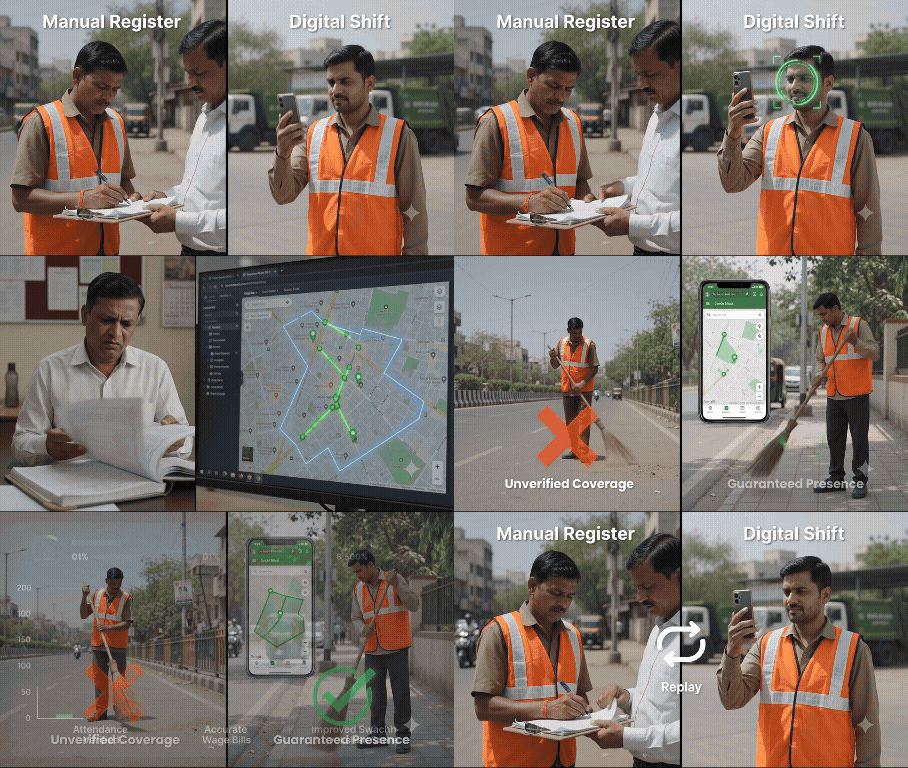
Together, mobile-based facial recognition combined with GPS zone tracking gives municipalities something genuinely new: real-time, worker-level, zone-level proof of actual sanitation coverage.
What This Looks Like Operationally
A well-designed system for sanitation worker attendance typically involves:
1. Mobile app-based facial check-in at the start and end of shift, and optionally at intermediate checkpoints within the assigned zone.
2. Continuous or periodic GPS logging throughout the shift, mapped against the worker’s pre-defined zone boundary.
3. Geofence alerts that flag when a worker’s device leaves the assigned zone for an extended period without authorization.
4. Supervisor dashboards showing real-time deployment status across all zones — who’s checked in, who’s within zone, who’s flagged for review.
5. Automated reporting for municipal audits and contractor payment reconciliation, replacing manual attendance registers that were, historically, the primary (and easily manipulated) source of truth.
A Grounded Example
Consider a municipal corporation running door-to-door and street-sweeping sanitation services through an outsourced contractor covering roughly 60 wards. Under the previous manual attendance system, the contractor submitted monthly attendance sheets that the municipal health department had no practical way to independently verify beyond occasional, unannounced physical spot checks — which, given staffing constraints, covered maybe a handful of wards a month at best. After introducing facial recognition check-ins combined with GPS zone tracking, the corporation could, for the first time, cross-reference contractor billing against actual verified deployment data across all 60 wards simultaneously. The immediate finding wasn’t dramatic fraud — it was a more mundane but still costly pattern: a meaningful percentage of billed worker-days showed check-in without corresponding zone presence, meaning workers were clocking in and then not covering their assigned areas. That data gave the health department, for the first time, a factual basis to renegotiate contractor terms rather than relying on unverifiable complaints from residents.
The Honest Limitations
Network connectivity gaps in certain ward areas can affect real-time GPS logging, requiring offline-sync capabilities in the mobile app. And technology alone doesn’t fix underlying contract structures — if a contract doesn’t actually penalize non-compliance, having the data to prove non-compliance doesn’t automatically translate into enforcement. The technology needs to be paired with contract terms and municipal will to act on the data it surfaces.
The Worker Welfare Angle Is Often Overlooked
It’s worth stating plainly that verified attendance systems aren’t only about catching non-compliance — they also protect honest workers. In manual, register-based systems, workers who genuinely show up and complete their assigned zones have no independent way to prove it if a dispute arises, whether about wages, disciplinary action, or contract renewal. A verified digital attendance and zone-coverage record works both ways: it protects the municipality from ghost billing, and it protects diligent workers from being unfairly grouped with non-compliant colleagues when contractor performance comes under scrutiny. Framing these systems purely as a policing tool misses this — done right, they’re also a form of protection for workers doing the job properly.
Integration With Broader Smart City Infrastructure
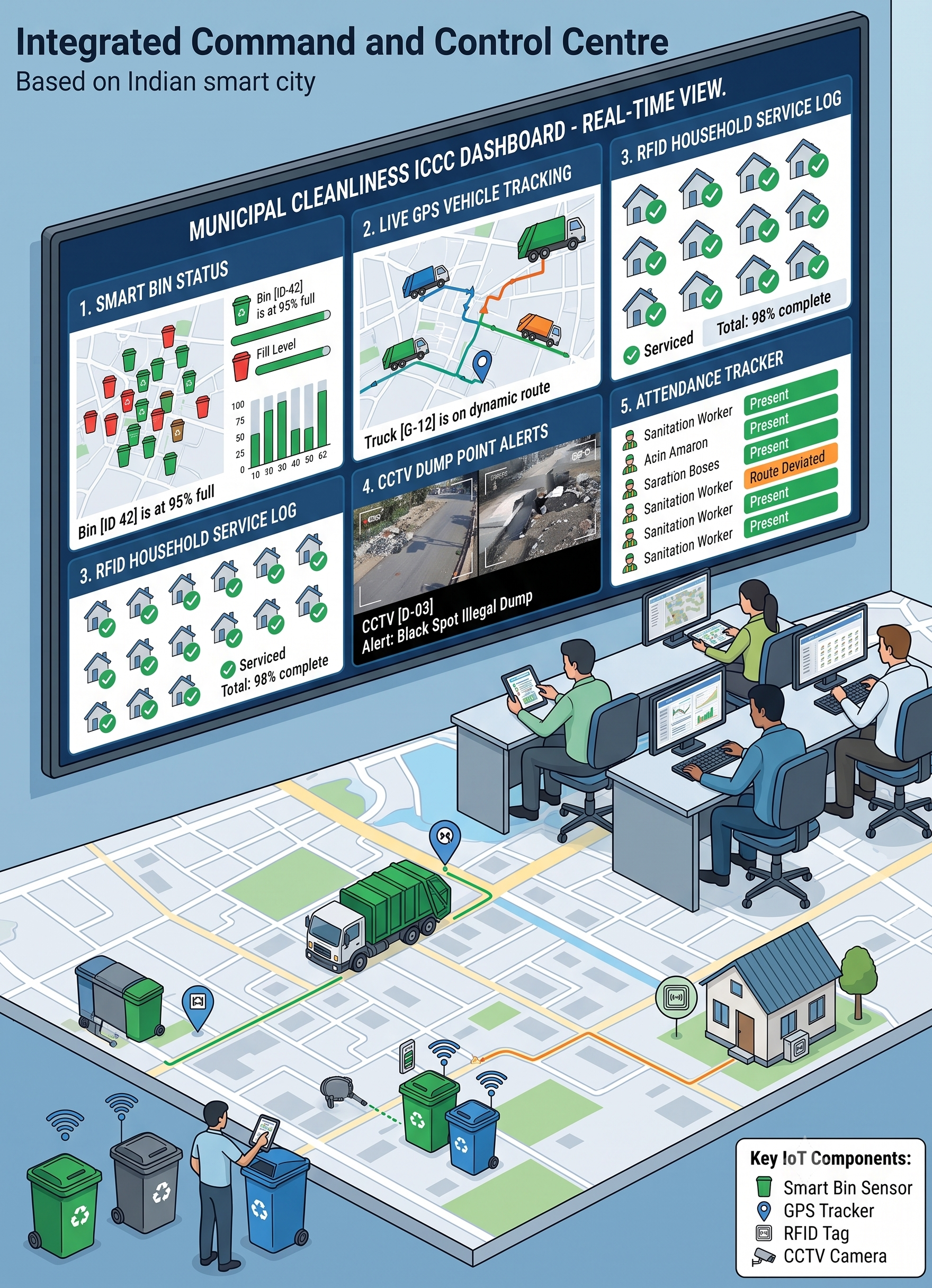
Facial recognition and GPS attendance data for sanitation workers becomes significantly more valuable when it’s not siloed on its own — when it feeds into the same ICCC dashboard used for vehicle tracking, bin sensor data, and citizen grievance redressal. This gives municipal leadership a genuinely unified operational picture: are the right workers deployed in the right zones, are collection vehicles actually servicing those zones, and are citizen complaints from those same areas trending up or down. Treated as an isolated attendance tool, the system answers a narrow question. Integrated into the broader command center, it becomes part of answering the actual question municipalities care about — is this city getting cleaner or not.
Final Word
Sanitation attendance in Indian cities has for decades run on a trust model that had no real mechanism for verification — and unverified trust, at the scale of hundreds of workers across dozens of wards, inevitably gets exploited by the weakest link in the chain, whether that’s a contractor cutting corners or a worker gaming the system. Facial recognition combined with GPS zone tracking doesn’t eliminate the need for good contract management or municipal oversight, but it gives both a factual foundation that manual registers simply never could.
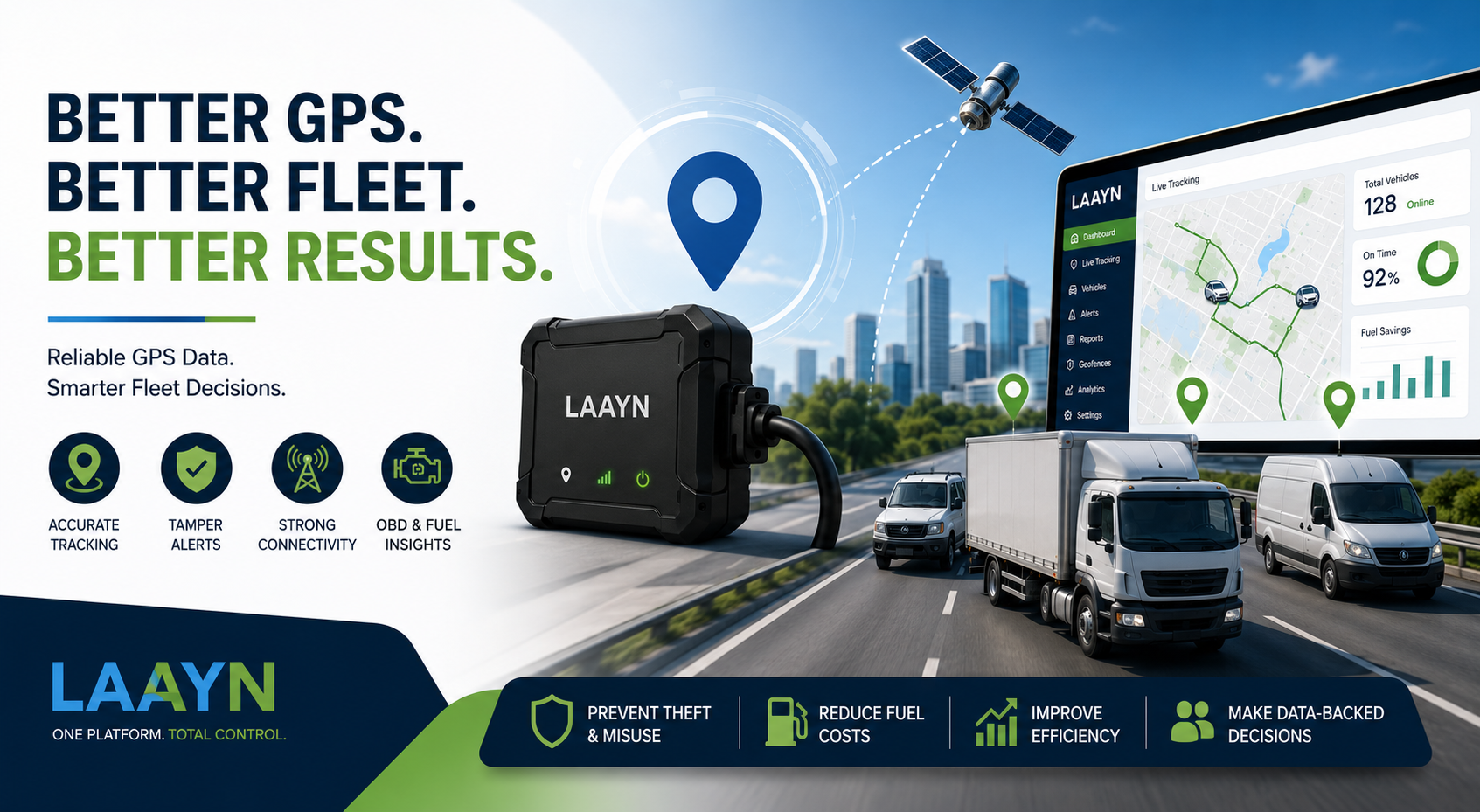
Looking to bring verifiable, GPS and facial recognition-based attendance to your municipality’s sanitation workforce? LAAYN Technologies work with ULBs and sanitation contractors on facial recognition and GPS-based worker monitoring integrated with ICCC dashboards. Reach out to discuss a pilot for your city’s sanitation workforce.
Learn more about LAAYN’s face recognition and GPS attendance app, or contact our team for a demo.