
There’s a particular kind of frustration that comes with paying for a fleet management system and still not trusting the data it gives you. The dashboard shows a vehicle parked at a location it clearly isn’t at. Route history has gaps. Ignition status reads “on” for a truck that’s been shut off for an hour. Almost every time this happens, the software isn’t the problem — the GPS device feeding it data is.
The Part of Fleet Management Nobody Budgets Properly For
Fleet management software gets most of the attention when companies evaluate vendors — the dashboard, the reporting, the alerts, the mobile app. The GPS hardware itself, the actual device sitting in the vehicle sending location pings, tends to get treated as a commodity — buy whatever’s cheapest, since “it’s just a GPS chip.” This is, consistently, where fleet management deployments go wrong.
A fleet management system is only as good as the data flowing into it. Software can build the most sophisticated route optimization algorithm in the world, but if the underlying GPS device is dropping signal, reporting location with a two-minute lag, or losing connection in weak-network areas, every downstream feature — live tracking, geofencing, driver behavior analysis, fuel monitoring — becomes unreliable at best and actively misleading at worst.
What Actually Separates a Good GPS Device from a Cheap One
Signal accuracy and refresh rate. Cheap devices often report location every 60-120 seconds, or worse, have inconsistent refresh intervals depending on movement. A quality device maintains a consistent, short refresh interval, which matters enormously for use cases like tracking waste collection vehicles through narrow municipal lanes or delivery vehicles in dense urban traffic, where a two-minute gap in location data can mean the difference between “route completed” and “route skipped a section” being indistinguishable.
Multi-network and fallback connectivity. Reliable devices support multiple network bands and can fail over between them, rather than simply going silent the moment primary connectivity drops — a common scenario in areas with patchy telecom coverage, which describes a significant portion of India’s semi-urban and rural road network.
Tamper detection. For fleets where driver behavior monitoring matters — fuel theft prevention, unauthorized vehicle use — a quality GPS device includes tamper alerts if it’s physically disconnected or the power supply is interfered with. Cheap devices are trivially easy to disconnect without triggering any alert, which defeats a major part of what fleet tracking is meant to prevent in the first place.
Integration with vehicle diagnostics (OBD). Better GPS units can pull ignition status, fuel level, and engine diagnostics directly from the vehicle’s OBD port, giving fleet managers data beyond just location — idle time, harsh braking events, fuel consumption patterns — none of which is possible with a bare-bones location-only tracker.
Build quality and durability. Fleet vehicles, especially commercial and municipal ones, operate in tough conditions — heat, vibration, dust, moisture. Cheap devices fail at meaningfully higher rates under these conditions, and a device failure means a data gap in fleet history that can’t be recovered after the fact.
Why This Directly Determines Whether the Software Delivers ROI
Here’s the part that often gets missed in procurement conversations: the most expensive, feature-rich fleet management software in the market cannot compensate for bad hardware. If a company spends on a strong platform but pairs, it with unreliable GPS units to save costs upfront, they end up with a system that looks sophisticated on paper but produces data nobody trusts in practice — and once fleet managers stop trusting the dashboard, they revert to manual verification methods, which defeats the entire purpose of the investment.
This is a genuinely common and avoidable failure pattern: organizations treat GPS hardware and fleet software as two separate procurement decisions, sourced from different vendors, with nobody accountable for whether the combination actually works reliably together in the field.
How LAAYN Approaches This Differently
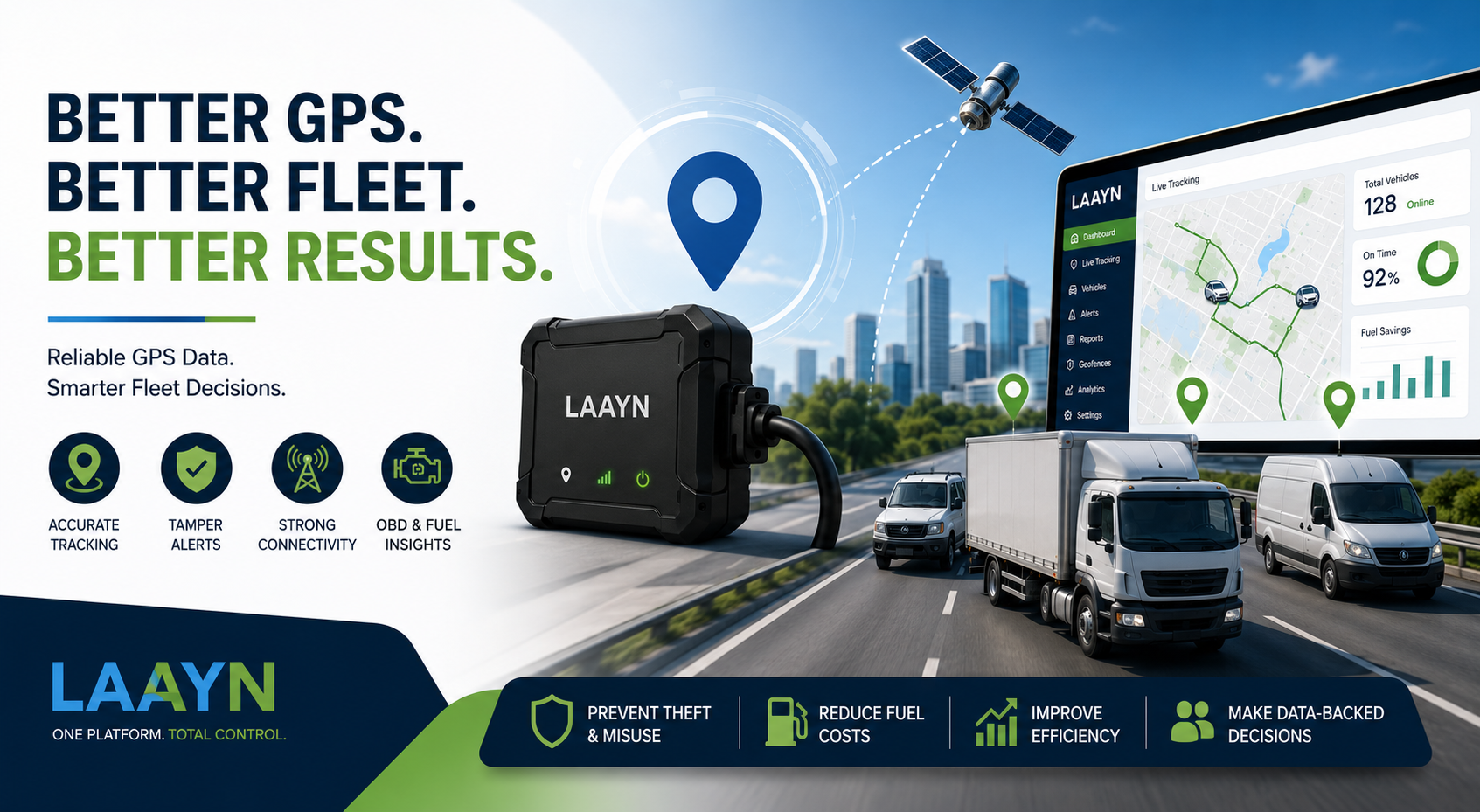
LAAYN’s approach to fleet management deliberately treats hardware and software as one connected decision rather than two separate procurements. Rather than leaving customers to independently source GPS devices — often ending up with inconsistent quality across a mixed fleet — LAAYN helps corporates and government clients source vetted, field-tested GPS hardware suited to their specific vehicle types and operating conditions, alongside a fully customizable fleet management software platform built around that hardware from the start.
This matters practically in a few ways
– Consistency across the fleet — every vehicle reports data at the same reliability standard, rather than a patchwork of device qualities producing inconsistent data across the same fleet.
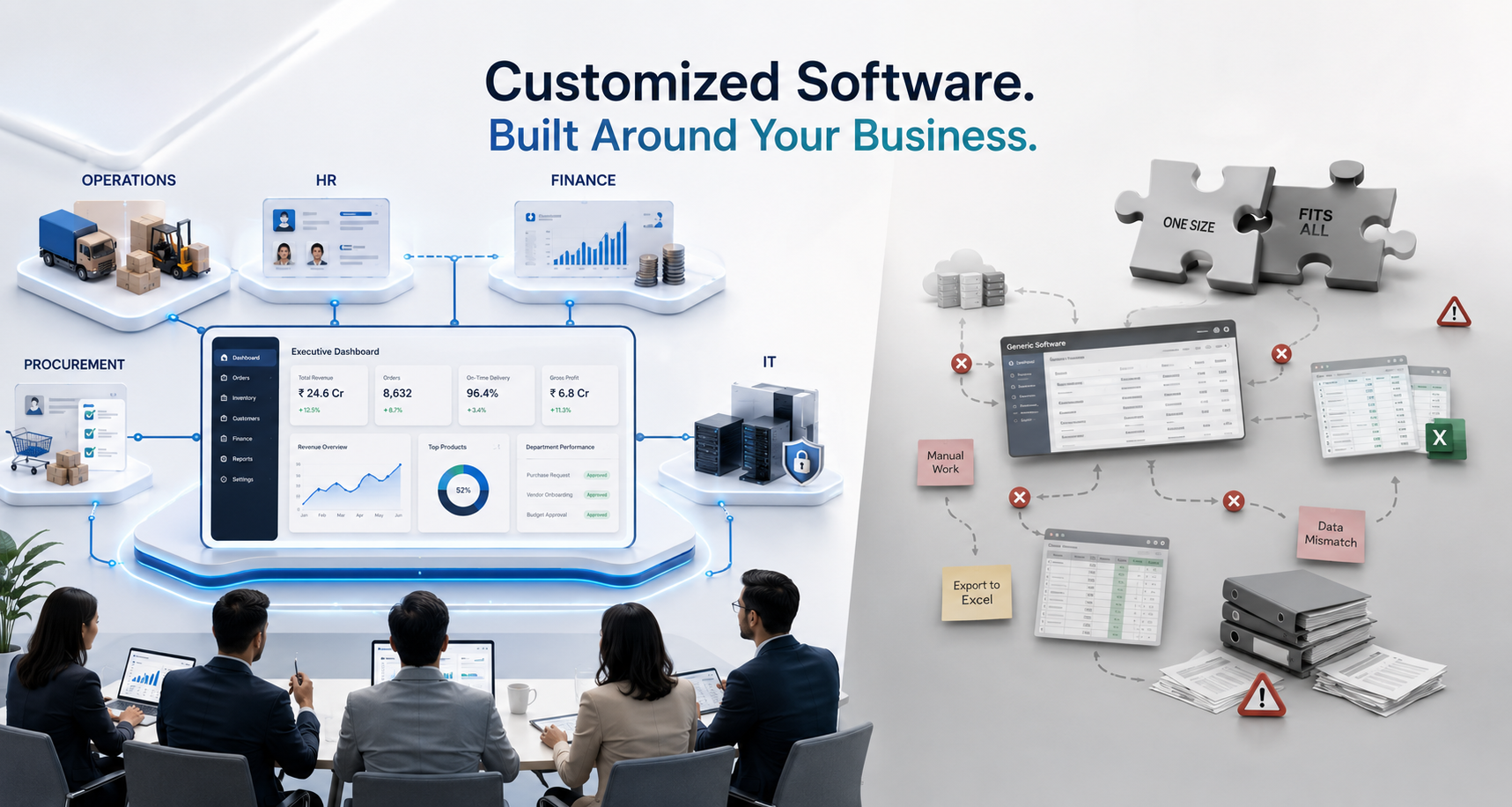
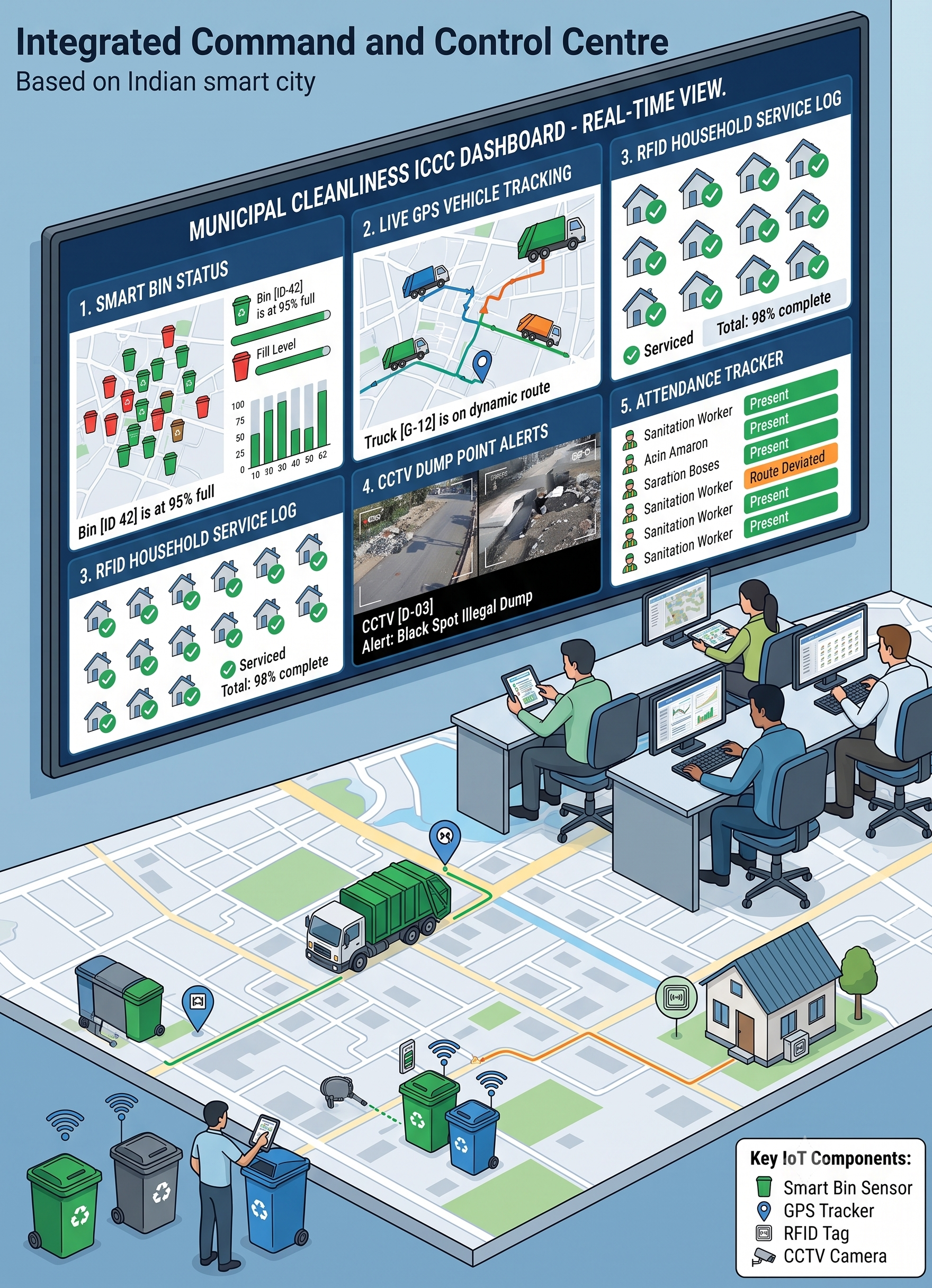
– Customization to actual use case — a fleet management platform for municipal waste collection vehicles needs different features (route compliance, dump-point verification, bin-level integration) than one for corporate logistics or field sales vehicle tracking. A generic, one-size-fits-all platform tends to force operations to adapt to the software rather than the other way around.
– Single point of accountability — when hardware and software come from a single, integrated relationship, troubleshooting a data reliability issue doesn’t become a finger-pointing exercise between a hardware vendor and a software vendor.
A Grounded Illustration
Consider a corporate client running a mixed fleet of delivery and field service vehicles who had previously implemented a fleet tracking system using low-cost GPS units sourced independently from their software vendor. Within months, fleet managers had largely stopped relying on the live tracking dashboard for day-to-day decisions, because location data was frequently stale or simply missing for stretches of a route — not due to any software bug, but because the underlying devices were dropping signal in weaker-coverage areas without any fallback mechanism. After transitioning to higher-quality, multi-network GPS hardware paired with a customized software platform, the same fleet managers began actually using the live dashboard for daily dispatch decisions again, simply because the data had become something they could trust rather than something they had to double-check with a phone call to the driver.
The Honest Trade-off
Better GPS hardware costs more upfront, per device, than the cheapest options on the market — there’s no way around that, and any vendor claiming otherwise isn’t being straight with you. The case for it rests entirely on total cost of ownership: fewer device failures, fewer data gaps requiring manual reconciliation, and a system fleet manager actually trust and use, versus a system that looks cheaper on the purchase order but ends up abandoned in practice within a year.
Fuel Monitoring: Where Cheap Hardware Costs the Most
Fuel theft and unauthorized usage are among the largest hidden costs in commercial and municipal fleets, and this is precisely where GPS hardware quality matters most directly to the bottom line. Cheap devices that only report location provide no way to correlate fuel level drops against actual vehicle movement, which means fuel theft — siphoning during unauthorized stops, for instance — goes completely undetected unless caught physically. Quality devices integrated with fuel sensors or OBD-level diagnostics can flag a sudden fuel level drop that doesn’t correspond to any engine activity, giving fleet managers an actual, actionable fraud signal rather than a suspicion with no evidence behind it. For large fleets running dozens or hundreds of vehicles, this single capability alone can pay for the hardware upgrade within a matter of months.
Municipal Fleets Have Their Own Specific Requirements
Government and municipal fleet management — waste collection vehicles, road maintenance vehicles, ambulance and emergency fleets — carries additional requirements beyond standard corporate logistics tracking. Route compliance verification against pre-defined municipal collection routes, integration with citizen grievance systems (so a complaint about a missed collection can be cross-checked instantly against actual GPS route data), and public accountability reporting for Smart City and Swachh Bharat Mission scoring all depend on GPS data being reliable enough to stand up to scrutiny, including, in some cases, public information requests or audit reviews. This is a higher bar than typical corporate fleet tracking, and it’s exactly why hardware quality matters even more in government fleet deployments than in private commercial ones.
Final Word
A fleet management system’s real value lives or dies on the quality of the location data feeding it — and that data quality is determined almost entirely by the GPS hardware, not the software dashboard sitting on top of it. Treating hardware and software as one integrated decision, rather than two separate procurements, is the difference between a fleet management deployment that gets used daily and one that quietly gets abandoned.
Looking for reliable GPS hardware paired with a fleet management platform built for your specific operations? LAAYN helps corporates and government clients source quality GPS devices and deploys fully customizable fleet management software around them. Get in touch to discuss your fleet’s specific requirements.
Learn more about LAAYN’s IoT-based vehicle and waste collection tracking, or contact our team for a demo.